Clicks observed
77
Recorded in project memory for the June 2026 Search Console window.
External project case study
A real AI prompt trend site used as evidence for AI Growth Bench. The useful lesson was not to publish generic AI prompt pages blindly, but to find a narrow image-editing intent cluster, ship stronger pages, request discovery, and measure what Google actually surfaced.
Direct answer
AI Trend Prompt Hub is a separate public AI prompt site used by AI Growth Bench as a real SEO operating case study. Its reviewed June 2026 Search Console snapshot recorded 77 clicks and 3,647 impressions, while only 17 of 52 sitemap URLs were known as indexed at that checkpoint. The useful result was not proof that every prompt page worked. It was evidence that specific image-editing jobs, including same-face outfit and clothes-change prompts, produced clearer early demand than broad AI prompt categories. That signal changed the workflow: inspect real queries, select a narrow intent cluster, strengthen the pages with concrete examples, submit only meaningful changes, and compare discovery after crawl delay. The case study remains historically dated, separates observed metrics from current performance, and does not make AI citation claims without a displayed source URL. AI Growth Bench uses it to demonstrate measurement and editorial decisions, not to inherit the older site's advertising or business model.
Reviewed by Alex, builder and operator of AI Growth Bench. Last reviewed 2026-08-03.
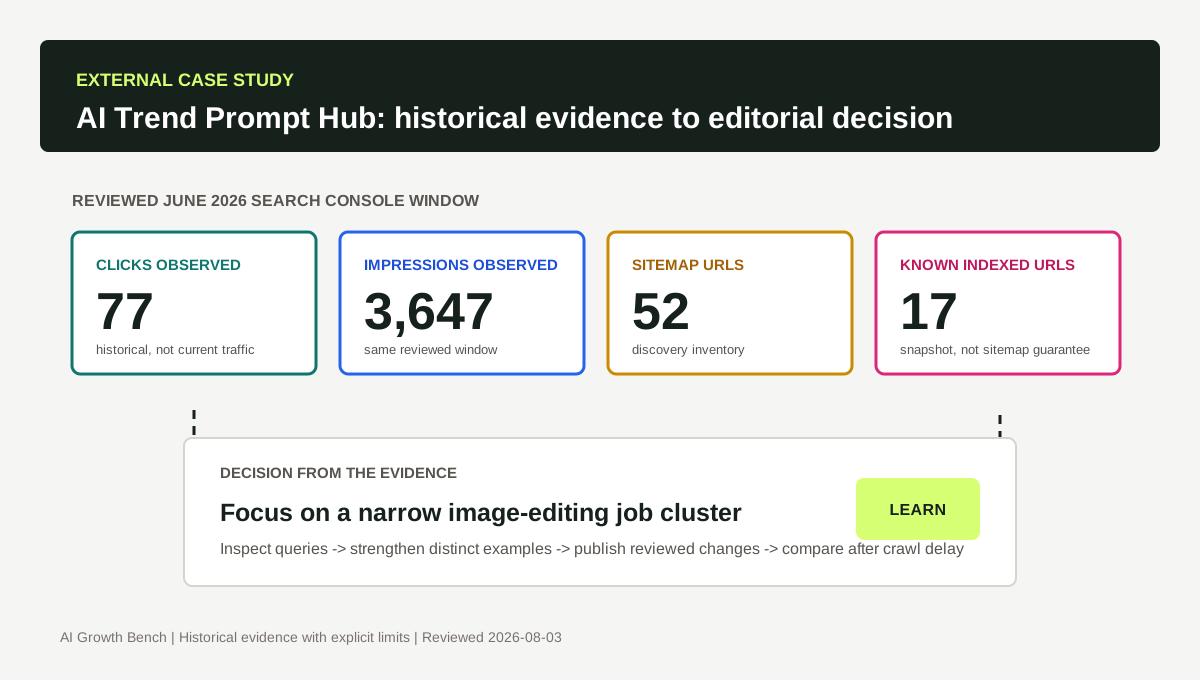
Clicks observed
77
Recorded in project memory for the June 2026 Search Console window.
Impressions observed
3,647
Early search visibility signal from the same reviewed window.
Sitemap URLs
52
After adding the case-study and same-face/outfit pages.
Indexed URLs
17
Known indexed count from the low-traffic diagnosis snapshot; newer URLs still needed follow-up.
Problem found
The site started with broad AI prompt and AI trend pages, but the early useful signal came from concrete visual-editing intent such as same-face outfit and clothes-change prompts. That changed the operating priority from adding many generic pages to building evidence around specific long-tail clusters.
Role
AI SEO systems, long-tail content operations, Search Console review, and indexing workflow
The reviewed Search Console data showed that concrete image-editing jobs produced more useful early search behavior than broad prompt categories. That did not justify mass-producing variants. It justified one focused cluster where the query, example output, prompt instructions, and internal links could all serve the same user job.
An operator still chose the cluster, checked whether each page added distinct value, reviewed the examples and claims, decided which URLs belonged in the sitemap, and interpreted the delayed index results. Automation supported collection, drafting, consistency checks, and reports, but it did not turn every discovered phrase into a public page.
They prove that the live project earned measurable search exposure and clicks during the stated window, and that index coverage lagged behind the sitemap inventory. They do not prove current rankings, qualified conversion, or AI citation. Those outcomes require their own current date window, landing-page evidence, and cited-source observation.
System built
This is the part that matters for portfolio value: the case demonstrates a workflow, not only a published site.
Operating loop
Use Search Console query and page data to find which topics are already getting impressions instead of guessing from trend lists alone.
Prioritize concrete image-editing intent around same-face outfit and clothes-change prompts because it is easier to match with a useful page.
Create stronger pages and a case-study page, then include them in sitemap, feeds, and discovery endpoints.
Submit or resubmit sitemap, request indexing for key URLs, and push discovery signals where appropriate.
Wait several days, then compare indexed state, impressions, query shape, and whether the cluster starts earning qualified clicks.
Lessons
Proof links
Official sources
Next actions