Direct answer
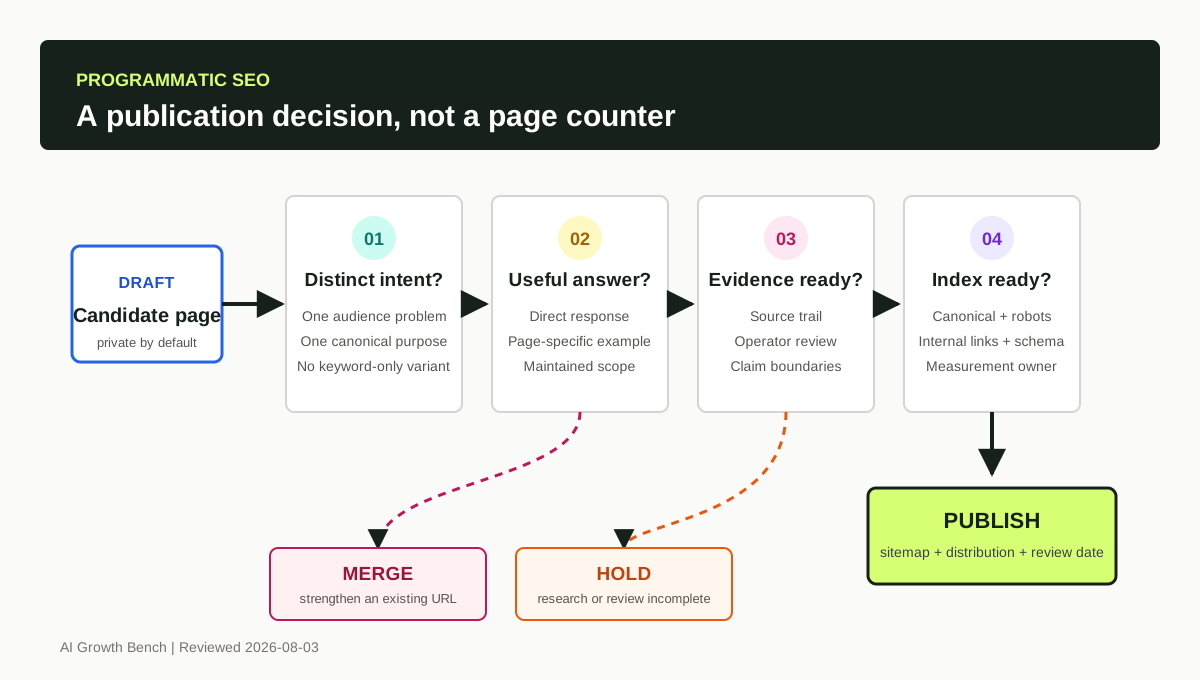
Programmatic SEO quality gates are explicit checks that decide whether a generated page should be published, merged, held, or excluded from search. A strong gate verifies that the page answers a distinct query, serves a real audience need, adds information that is not already available on another page, cites its evidence, and fits the site's topical scope. It also checks the title, H1, canonical, robots directive, internal links, structured data, mobile rendering, and measurement plan before sitemap inclusion. Pages that only swap a keyword, location, or product name without adding useful detail should fail the gate. The operating goal is not a perfect score; it is a defensible publication decision with a recorded reason. After release, Search Console, analytics, crawl logs, and user behavior feed the next review. A page that remains undiscovered or unhelpful should be strengthened, merged, or removed from active indexing rather than repeatedly resubmitted.
Reviewed by Alex, builder and operator of AI Growth Bench. Last reviewed 2026-08-15.
Target keyword
programmatic SEO quality gates
Search intent
SEO operators want a practical checklist that prevents generated pages from becoming thin, repetitive, or unsafe to put into the sitemap.
Last reviewed
2026-08-15
Google discovery
Submitted and indexed in the 2026-08-15 Google URL Inspection snapshot.
Why this matters
Programmatic SEO can create traffic, but it can also create a site full of near-duplicate pages that search engines ignore. The difference is the gate between draft and publish. If every generated page is treated as publishable, the site usually earns crawl waste, low trust, and weak indexation.