Direct answer
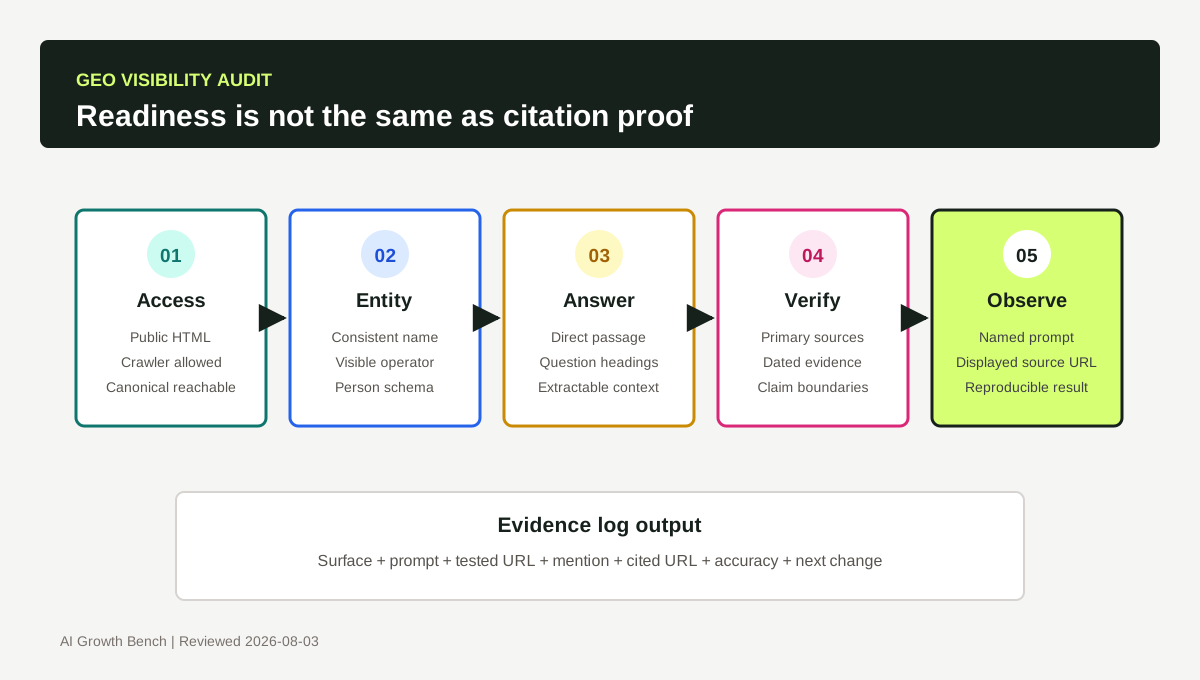
A GEO content checklist is a pre-publication review for making a page accessible, understandable, extractable, and verifiable by search and answer engines. It confirms that the page names its primary entity, answers the target question near the top, uses descriptive question headings, shows who reviewed it, cites primary sources, and separates observed results from hypotheses. The checklist also verifies server-rendered content, canonical metadata, crawl permissions, internal links, structured data, and a repeatable prompt-based measurement plan. Passing these checks does not mean ChatGPT, Perplexity, Gemini, or Google AI features will cite the page. It means the page gives those systems a clearer source to evaluate. After publication, the operator should record the tested URL, surface, prompt, date, mention, displayed citation, accuracy, and next revision. That evidence log converts GEO from a one-time formatting exercise into a measurable content operation.
Reviewed by Alex, builder and operator of AI Growth Bench. Last reviewed 2026-08-03.
What makes an answer extractable?
Place a self-contained answer immediately after a descriptive heading, name the entity directly, define any specialist term, and keep the passage understandable without the surrounding page. Follow it with question-led sections, lists, or tables that expand the answer without contradicting it. Avoid burying the conclusion after a long introduction.
How should a GEO page use sources?
Link claims to primary or official documentation where possible, explain what each source supports, and keep first-party experiment data clearly dated. A source list is not enough when the body makes unsupported claims. Visible authorship, reviewed dates, and correction notes help readers and answer systems distinguish evidence from interpretation.
How should AI visibility be recorded?
Repeat the same prompt on named answer surfaces and capture whether the entity was mentioned, whether the canonical URL was displayed, and whether the answer was accurate. Record misses and ambiguous results as carefully as citations. Crawler access, structured data, and llms.txt remain readiness signals, not citation proof.